


Preparing for Breast Reconstruction Surgery
Conveniently located to serve the areas of Lake Forest, Glenview and Grayslake, IL
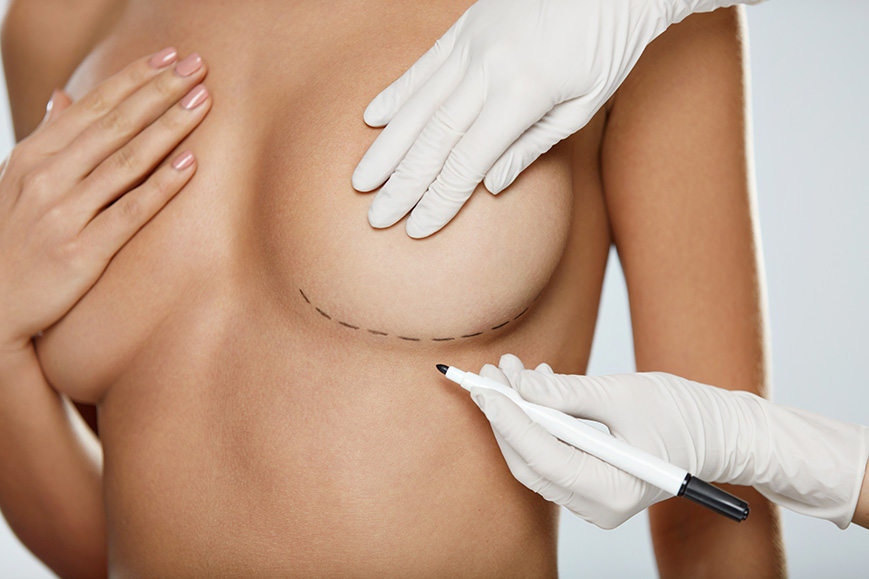
Please follow these instructions before and after your breast reconstruction surgery.
This guide will help you understand:
- How to prepare for surgery
- What to expect before, during and after surgery
- How to care for yourself at home
Contents
Preparing for surgery
Follow these guidelines at least 1 week before surgery:
- Stop smoking cigarettes at least 6 weeks before surgery for your best chance of a healthy recovery.
- Pick up the medications your care team sent to your pharmacy during your pre-operative visit. These may include pain medications, a muscle relaxant and a stool softener.
- If you are taking a blood thinner, contact your prescribing physician and ask if it is okay to stop taking it. If your physician says it is OK, stop taking your blood thinner 1 week (7 days) before your surgery.
On the day before surgery, the OR will call to tell you what time to arrive for surgery. Do not eat solid food after midnight on the night before your surgery.
On the day of your surgery
In the morning (2 hours before your scheduled arrival time at the hospital), complete the following steps:
- Drink 1 cup (8 ounces) of a clear carbohydrate-loaded drink, such as apple juice or Ensure® Clear.
- If we told you to take any specific medications, including your daily medications, take them with a small sip of water.
- Do not eat or drink anything else before your surgery.
At the hospital
A member of your care team will take you to the pre-operative area, where you will do the following:
- You will change into a hospital gown.
- You will meet with your surgical and anesthesia team. They will answer any questions you may have.
- You will sign consent forms.
- We will place a line into the vein (IV) in your hand or arm so we can give you fluids and medications.
During surgery
Your loved ones may be able to wait in the waiting room during your surgery. Your care team can update them on your progress. We recommend that you choose 1 person who can share these updates with other family members and friends.
Please review our current visitor policies at nm.org/visitors.
Post-Anesthesia Care Unit recovery
After surgery, we will take you to the Post-Anesthesia Care Unit (PACU). This is where you will wake up from anesthesia:
- You will stay in the PACU for 1 to 3 hours. You are not allowed to have visitors.
- A nurse will check on you often. They will check your blood pressure, pulse and incision (cut). They will ask about your pain and make sure you are comfortable.
- Your surgeon will check on you. You may not remember this if you are still recovering from anesthesia.
When you wake up, you may have:
- An oxygen mask over your face or tubing by your nose.
- An IV to give you fluids and medicine.
- A urinary catheter (thin, plastic tube) to drain urine out of your bladder.
- A small monitor on your breast if you had a deep inferior epigastric perforator (DIEP) flap reconstruction. This monitor allows the surgeon to check the blood flow through the flap. We will remove it before you go home.
After surgery
During your recovery in the hospital (if applicable):
- You will be on a clear liquid diet for 6 to 12 hours after surgery. Then, you may start eating a normal diet. Your care team will help you sit in a chair to eat.
- Your care team will remove your urinary catheter and your IV.
- You will walk 2 or 3 times a day with assistance.
- A nurse will teach you deep breathing and coughing exercises to help prevent pneumonia.
What your chest may look and feel like
It’s important for you to look at your chest after surgery so you are familiar with how it looks and feels.
- There may be lumps and bumps, swelling or bruising on the skin. Your incision may also feel tight or tender. This is normal.
- Your surgeon closes the incision across your breast with stitches. You may see some redness and small bloodstains on the skin tape covering the stitches. This is normal.
Your physician or nurse will check your breast before you leave.
Recovering at home
Incision and drain care
We will give you separate instructions on how to care for your incision: Your Guide to Stitches and Incision Care. We will give you separate instructions on how to care for your drain at home: Caring for Your Drain and Drain Site.
If you have a wound vacuum dressing
You may go home with a wound vacuum dressing on your stomach if you have had a DIEP, profunda artery perforator flap (PAP) or diagonal upper gracilis flap (DUG) procedure. This dressing is connected to a battery pack. Do not take it off. Your surgical team will remove it at your first post-operative appointment.
Showering and hygiene
If you are sent home in a surgical bra, wear it as much as possible until your follow-up appointment. You may also wear a support bra that does not have an underwire and does not press on your breast. You may remove the bra to shower and to wash it.
Shower every day starting 48 hours after surgery. We recommend daily showers to help keep the incision clean. It’s OK if the tape covering your stitches gets wet.
Do not soak in a tub or spray water directly on your incision.
When you shower:
- Remove your bra and gauze pad.
- Wash with lukewarm water and plain, non-perfumed soap.
- Use a soapy washcloth to gently dab around your incision.
- Rinse well. If the tape moves or comes off, replace it with a new piece.
- Do not point the shower stream directly at your breast.
- Pat the area dry with a clean towel. Do not rub it.
- If you want to shave under your arm, you must use an electric razor.
You may use deodorant after you put on your bra. Do not use deodorant if you have breaks (cuts) in your skin.
Pain and swelling
Some discomfort is normal after surgery. You may notice:
- A stinging sensation around the incision and drain sites
- Itching at the drain site
- Tenderness along your lower rib cage, as if you are wearing a very tight bra
These symptoms should slowly improve. You may take pain medication as directed.
Pain management
You should take over-the-counter (OTC) pain medications on a regular schedule while pain persists after you leave the hospital. This includes:
- Acetaminophen (Tylenol®): 2 500-milligram (mg) tablets every 6 hours, and
- Your choice of either:
- Naproxen (Aleve®): 200 mg every 8 hours, or
- Ibuprofen (Advil®): 600 mg every 6 hours
For pain that does not get better with OTC medications, your surgeon may prescribe the below medications:
- Tramadol: 50 mg every 6 hours as needed for pain, aching or throbbing OR Oxycodone: 5 mg every 6 hours for breakthrough pain
- Tizanidine: 2 mg three times daily as needed for muscle spasms
- Gabapentin: 300 mg twice daily as needed for nerve pain
If your doctor says it is OK, use a cold pack wrapped in a thin towel to help reduce pain and swelling. Only leave it on for 10 to 15 minutes at a time, then remove it for at least 20 minutes. You may damage your skin if the cold pack is left on too long. Repeat this as often as needed until the swelling starts to improve. Do not fall asleep with the cold pack on.
Other common feelings after your surgery include:
- Numbness under the arm and over the chest
- Warmth or pins and needles sensations in your arms
- Feeling like water is trickling down your arm
During your surgery, we may cut, move or stretch nerves. This can cause any of the above symptoms. They will slowly improve. However, some numbness may be permanent.
What to eat and drink
You should resume your normal diet slowly. It may take time for your appetite to come back. This is normal.
If you find it hard to eat enough calories:
- Eat smaller servings at each meal.
- Add nutritious snacks between meals.
- Try high-protein, high-calorie shakes like Ensure or BOOST®
- Drink plenty of nonalcoholic liquids.
Exercise and activity restrictions
- Avoid vigorous activity and exercise as directed by your care team.
- For the 1st 2 weeks, do not lift, push or pull more than 10 pounds.
- Walk once per hour during the daytime to help prevent blood clots.
- Talk to your doctor about light exercise, such as walking, that you can do until you are fully healed.
- On average, you should be able to return to full exercise without restrictions around 6 to 8 weeks after your surgery.
- Do not push through any pain.
- You may begin driving once you are no longer taking any prescription pain medication and can safely drive your vehicle.
Sexual activity
Do not engage in any sexual activity for at least 2 or 3 weeks. Wait until you are completely comfortable.
Medications
For DIEP only, to help prevent blood clots, you will be prescribed:
- Aspirin: 162 mg daily for 14 days (2 weeks)
- If you have a history of blood clots or a clotting disorder, you might be prescribed something other than aspirin.
To help with constipation, you may be prescribed:
- Docusate sodium (Peri-Colace®), a stool softener: 100 mg daily as needed
1 week after surgery
You will meet with an advanced practice provider to check your healing progress. We will help you with any surgical needs, such as changing bandages, cleaning the incision site and managing your stitches.
2 weeks after surgery
You will meet with your physician to check how you are healing. You might have stitches and/or drains removed if needed, and your physician will give you care instructions. Your physician will also determine the timeline for your next follow-up appointment.
When to contact us
Contact us via phone or the MyNM app any time, day or night, if you have:
- A temperature more than 100.4 degrees F for 2 readings that are taken 4 hours apart. You do not need to take your temperature unless you feel hot.
- An increase in redness, swelling or a lot more pain around or under your incisions.
- Pain that does not get better with medication.
- Diarrhea, nausea or vomiting that does not get better.
- A bulb container that fills with blood rapidly or more than once.
Contact us via phone or the MyNM app during the day if:
- You need a prescription refill.
- Your drain bulb will not stay compressed.
- Your drainage tube falls out.
- The suture that is holding the tube in place comes out.
- You have any other questions or concerns.